Which one are you?
Three Paths for Engineers in the AI Era
Differences in tools are superficial; it’s the workflow that makes the difference.
I was recently talking with a friend about how we each use AI to write code. The differences were wild—it wasn’t just a matter of different tools; our workflows were like completely different species.
They can be broadly divided into three types.
Write the code yourself. The AI catches bugs, predicts problems, and occasionally fills in gaps. Engineers decide what to write and how to write it; the AI does not interfere with the main workflow.
Leave the development to the AI; engineers focus solely on writing tests. Once you define “what counts as correct,” you can run a single test to determine whether the AI’s code passes or fails. The job has shifted from writing code to writing specifications.
Leave the development and testing entirely to AI. Describe the requirements, review the output, and fine-tune the details. Don’t touch the code—just set the direction.
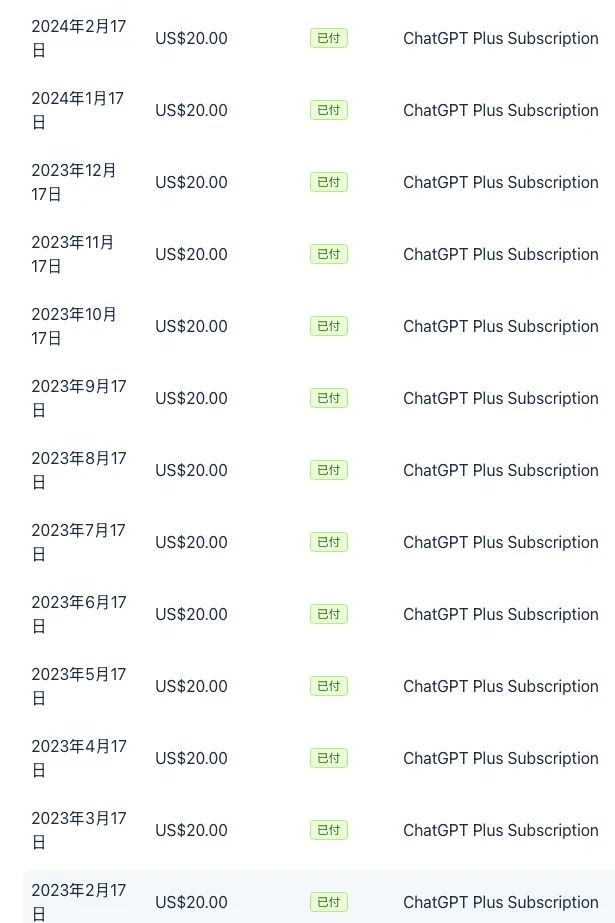
When ChatGPT 3.5 came out, I subscribed to ChatGPT Plus. I wrote my own code and occasionally threw a snippet at GPT to ask if there was a better way to write it. Later, the company bought a Team plan, so I canceled my personal subscription.
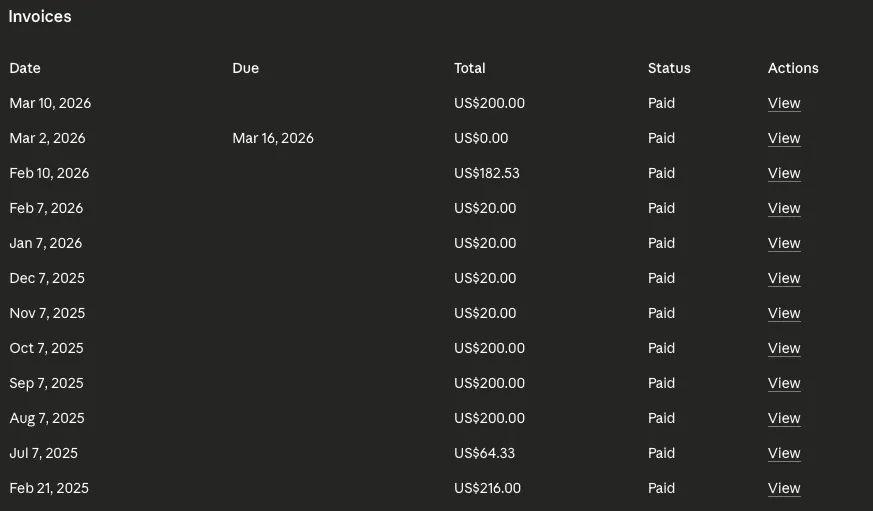
I started using Claude Pro, and my bill jumped to $200 a month. The AI writes more code, so I spend more time testing and reviewing it myself.
GitHub Copilot, I'm drawn to its workspace features and GitHub integration advantages. Early on, it was considered one of the most comfortable tools to use within the VS Code plugin ecosystem.

Google AI Pro—I signed up for it along with NotebookLM and Nano. I’m using it for free thanks to my U.S. school affiliation.

While playing with OpenClaw, I accidentally learned the skills of multitasking and command. The models are smart enough now that things I used to think were too overwhelming to even consider are finally doable with AI subordinates. I eventually put OpenClaw on hold because it burned through too many tokens—but that experience completely turned me into a commander-type, prompting me to pivot and work on my own stuff.
| Services | During that time | Amount |
|---|---|---|
| ChatGPT Plus | 2023/2 ~ 2024/2 | $260 |
| Claude Pro / Max | 2025/2 ~ 2026/3 | $1,342.86 |
| GitHub Copilot | 2025/5 | $100 |
| Google AI Pro | ~2025 ~ Present | $0 (edu—free) |
| Total | $1,702.86 | |
The "Command-and-Control" approach doesn't require you to be an engineer. Anyone can tell AI to do something.
But there's a big difference.
People who don't understand technology just take whatever AI gives them. They can't tell if the architecture is good or not, and they don't know where the pitfalls lie.
People with technical expertise first set the boundaries—how to choose the framework, how to break it down into modules, and what parts can’t be changed. Let the AI work within those boundaries; if it strays, correct it immediately.
The difference isn't in the speed of production — it's when something goes wrong.
This is like how a software department operates. The manager understands technology and doesn't write code on a regular basis. They set the direction, assign tasks, and review outputs. The engineers underneath do the implementation. When things are running smoothly, the manager just talks the talk. When something goes wrong? The manager jumps in to take over. Because they understand it, they are able to save the day.
The output is consistent, but the process is slow. As AI capabilities continue to improve, the efficiency gap between AI and handwriting will only widen.
The leverage is high, but so are the demands on testing capabilities. If testing isn’t thorough enough, we won’t be able to validate the results produced by the AI.
It’s the fastest and easiest way—but also the riskiest. Your value comes down to one thing: whether you can handle it when things go wrong.
These three modes are not mutually exclusive. Many people switch between them based on the nature of the project.
But one thing is certain: no matter which path you choose, the importance of “understanding technology” hasn’t diminished—if anything, it’s become even more important.
Because the more powerful AI becomes, the more valuable the ability to determine whether something is correct becomes.
That line, "The three modes are not mutually exclusive; many people switch based on the project's nature," doesn't fit into a single identity label. Let's change this to three rows: two questions per row—who writes the code, and who writes the tests. The determination should use only the three definitions above; if it falls into a combination not covered in this text, just state outright that there is no such category. Everything runs entirely in the browser, with nothing sent out. The tag column can be left blank, or if you want to fill it in, just use a code without any project names or credentials.
Sources of constants are all in this text. The "Handwritten camp" is "AI doesn't touch the main workflow," the "Testing camp" is "devs hand the coding over to AI, engineers write tests exclusively," and the "Commander camp" is "both dev and testing are entirely handed over to AI." The three trade-offs in the right column are copied verbatim from the three cards above. This text does not state which distribution is best; no ratings or passing lines are drawn here. What it judges is merely how you describe these three projects, not what they actually look like—no repo was read, no commits were checked, and no test coverage was looked at. In reality, "who writes the code" is a continuum, and a binary choice forces a mixed state into a single box. The three rows are not a census; they are just three things you picked at random.
I'm still learning. Programming is one thing, but LLM keeps teaching me things I never expected every day. Sometimes, the results from a single prompt are even better than the plan I originally had in mind.
The AI community is extremely active right now. New tools, frameworks, and approaches are popping up every week. As we absorb new knowledge, we must constantly evaluate their feasibility—what works, what’s just hype, and what’s worth exploring further.
Both the breadth and depth are expanding simultaneously. There is still a long way to go.